SOME THINGS ARE WORTH THE RISK
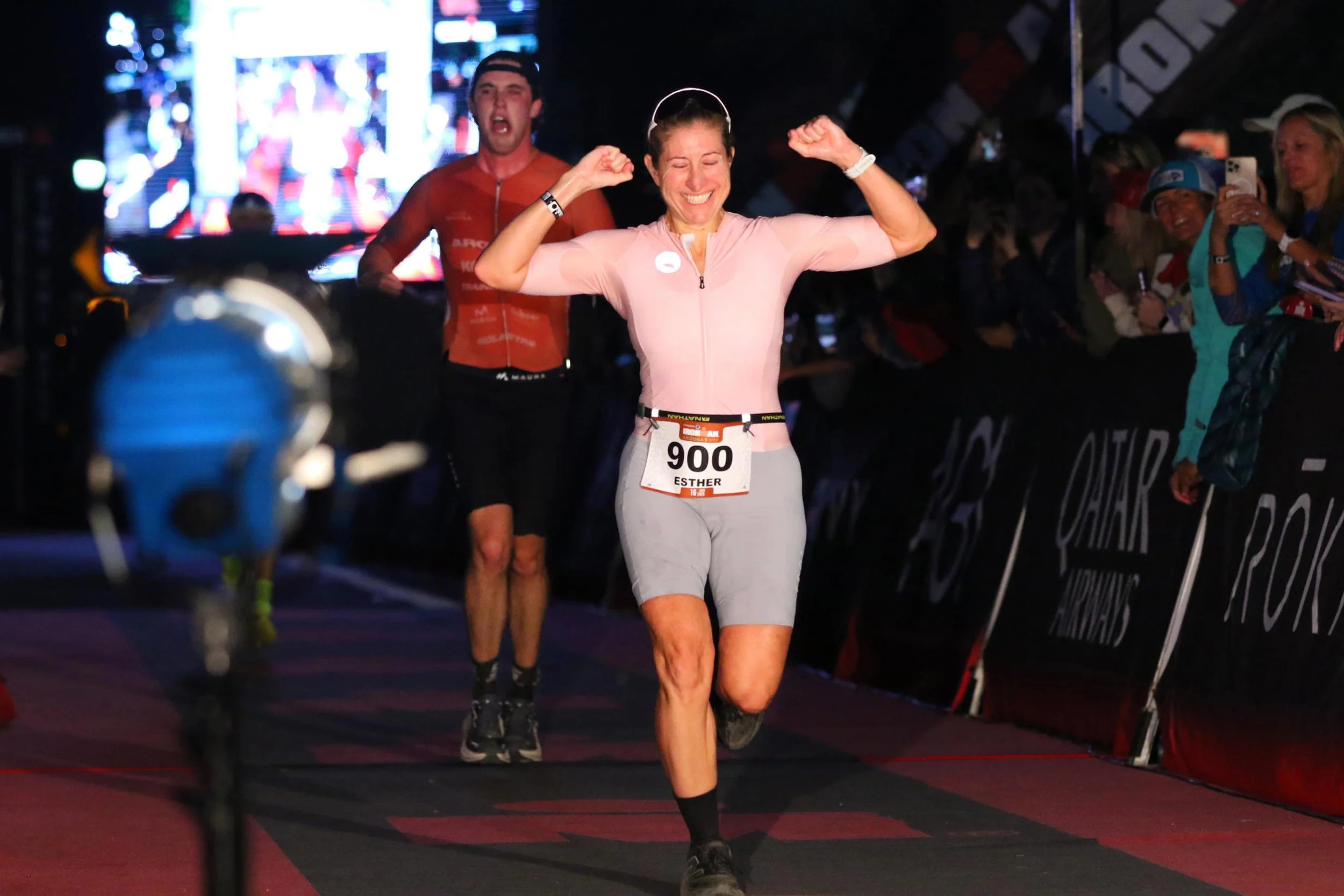
Racing in IRONMAN Arizona this past November took courage. I just knew I didn’t want to end the year feeling low, dark, and heartbroken as I did after IRONMAN Maryland.
I was registered to compete in my 10th full-distance triathlon at IRONMAN Maryland, but the night before the race, Jimmie and I agreed it wouldn’t be safe for me to race. After months of hard training and sacrifice, we decided to hit pause on my dream to qualify for Kona to focus on my health. The next day, I ended up in the emergency room, and, after 8 weeks of living with chronic vertigo, was diagnosed with vestibular migraine.
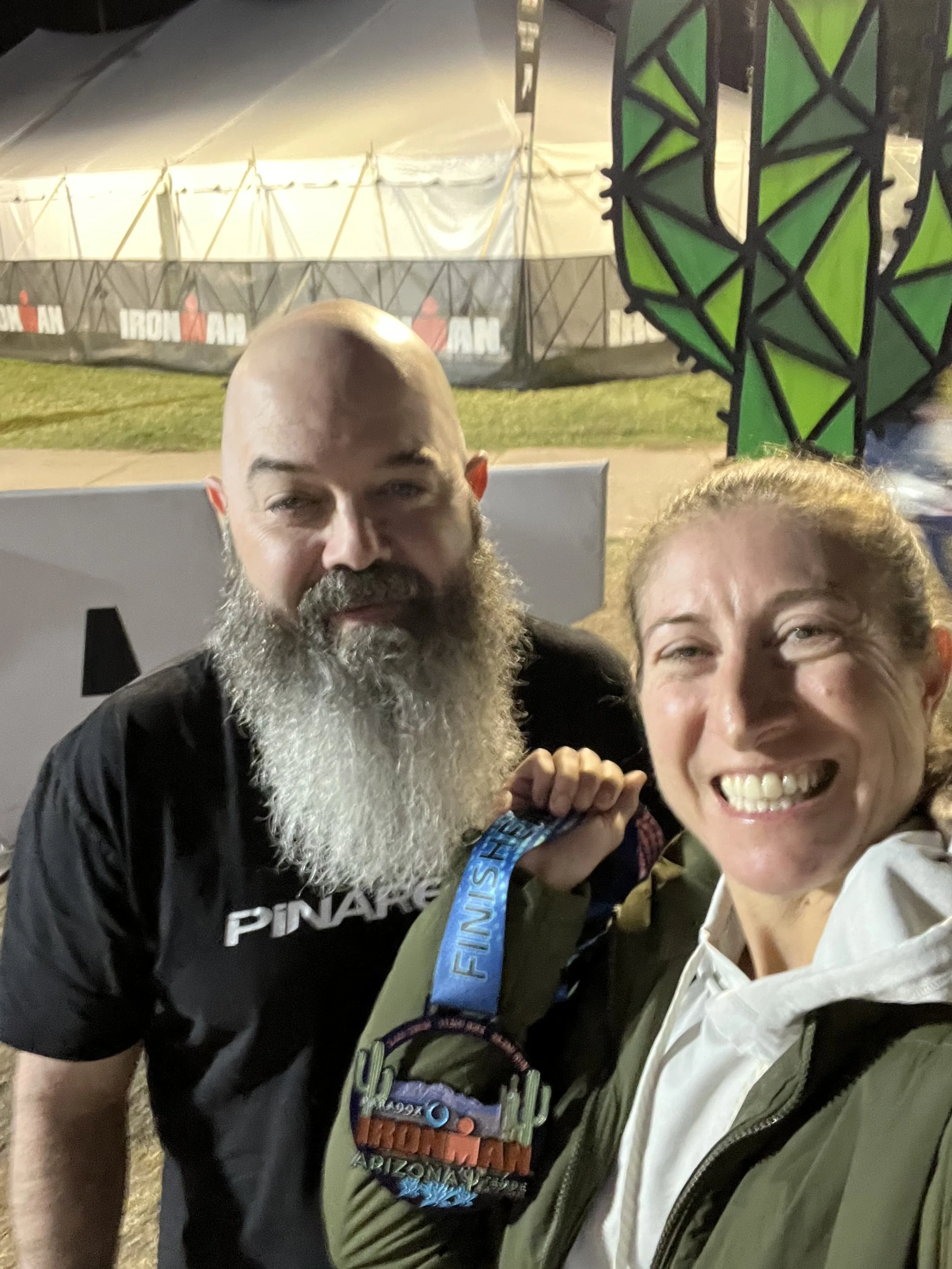
My neurologist prescribed a migraine medication that brought immediate relief! I was finally able to live without feeling like I was on a boat. It was then, 4 weeks after IRONMAN Maryland and just 3 weeks before IRONMAN Arizona, I told Jimmie that I had decided to go for it! His unwavering support meant everything, giving me confidence that I was making the right choice. To our surprise, I finished 3rd in my age group! This podium finish on my 10th IRONMAN was a team effort I will cherish for life!
I hope the lesson I learned through this journey serves as a gentle reminder that it’s not just okay, but sometimes essential, to pause and regain your balance, your homeostasis, so you can continue pursuing your dreams with a healthy body and open heart! There is real power in our dreams!
RACE RECAP
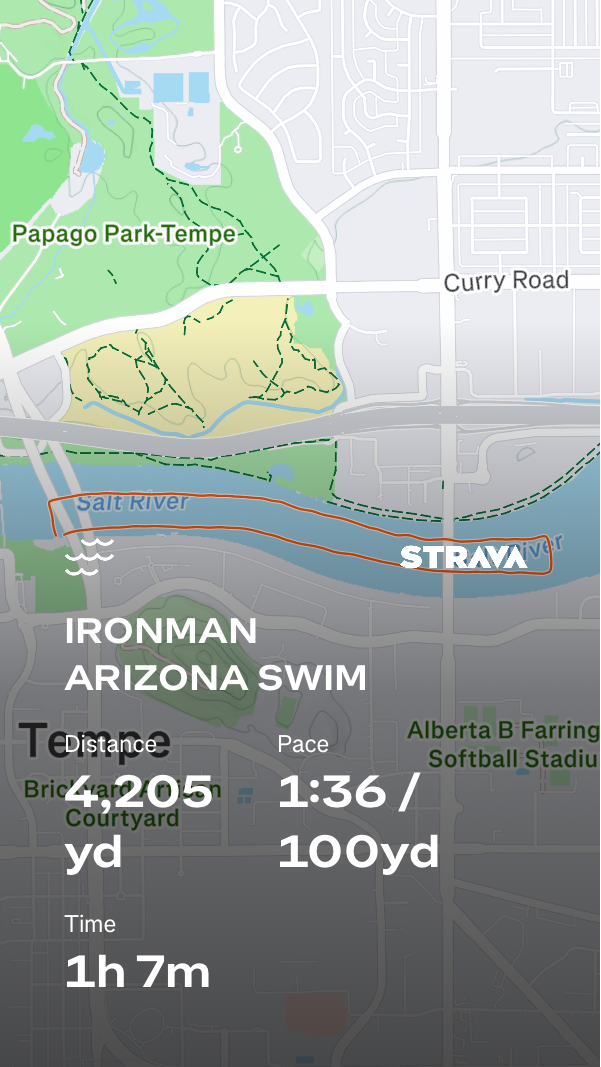
SWIM 2.4 MILES (TIME: 1:07:56)
I woke up at 3:45am to begin my pre-race routine: breakfast, foam rolling, gathering all my race bottles, and heading to transition. Since our Airbnb was in Scottsdale and the race was in Tempe, Jimmie dropped me off at the transition area.
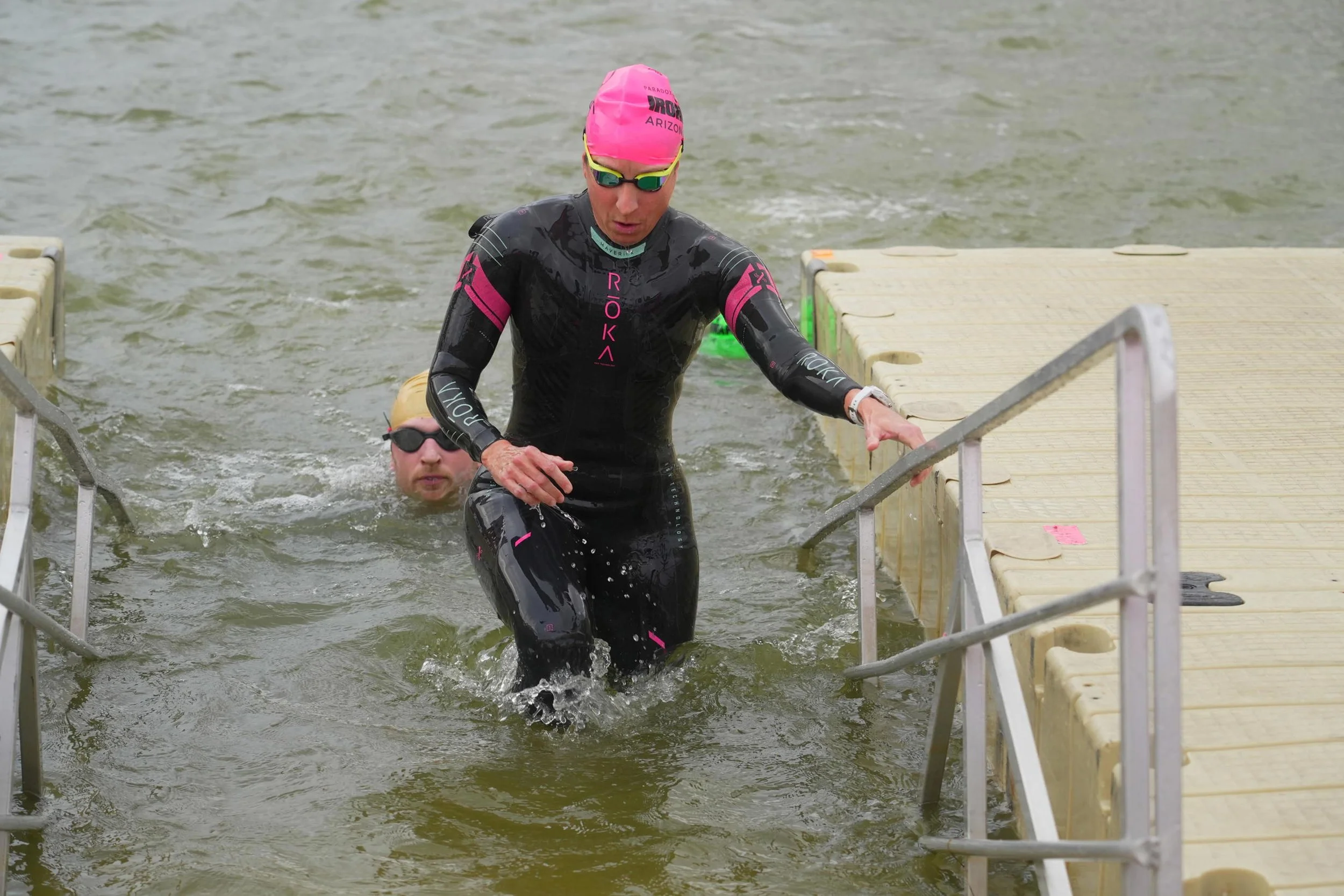
After setting up my bike with all the race nutrition, pumping my tires, checking gears and brakes, I made my way to the swim start. The water temperature that morning was 66F (19C) and air 53F (12C). I chose my Roka full-sleeved wetsuit and felt comfortable.
On paper, the swim course seemed straightforward, a one-loop circuit in Tempe Lake with just 3 turn buoys. But swimming it was tougher than I expected, maybe due to the 6:40am dark start and the challenge of sighting straight in the dark. I wore my tinted Arena goggles, which helped once the sun rose but made it hard to see buoys for the first half of the swim. Many of the smaller buoy markers were also deflated, making them tricky to spot. Sometimes I’d nail the buoy directly, other times I’d veer off course, feeling disoriented. I found my rhythm after the second turn buoy when the sun came up and finished the swim in 1:07, placing 2nd in my age group (50-54). This was a personal record for a non-assisted IRONMAN swim. My fastest IRONMAN swim remains Cozumel at 59 minutes, but that was an assisted swim, swimming with the incoming tide.
T1 TRANSITION FROM SWIM-TO-BIKE (TIME: 7:09)
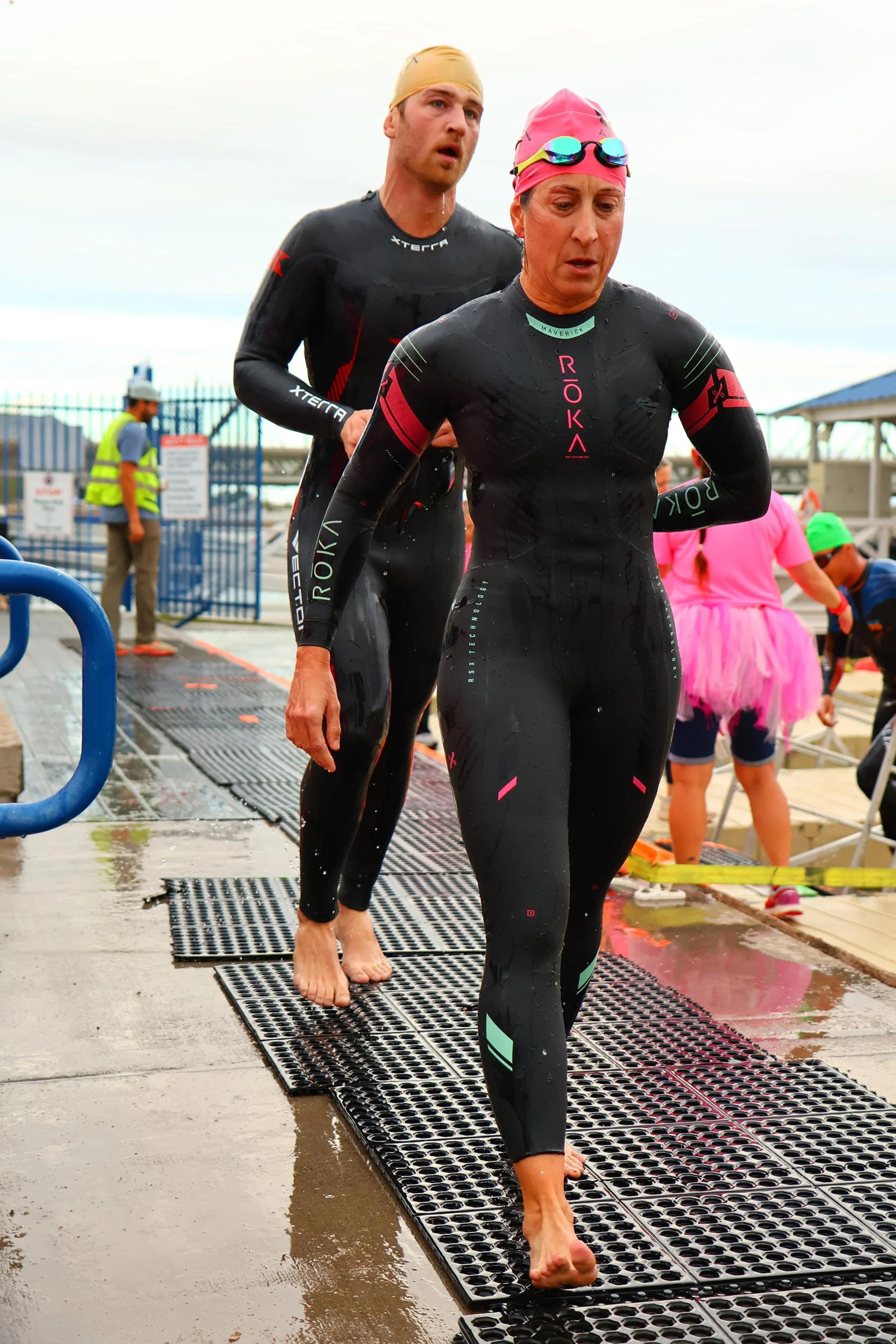
Coming out of the swim, I wanted to make sure my brain and vertigo were okay, so I walked into transition while peeling off my wetsuit sleeves. After grabbing my bike bag, I tested myself by running into the changing tent – everything felt good.
Inside the tent, I removed the rest of my wetsuit and got ready for the bike leg. Since it was a chilly morning in the desert, I put on socks, a first for me. Jimmie had gifted me a pair of Silca aero riding socks designed for speed. I put them on for warmth, speed, and my #1 Sherpa.
I ran to my bike, clipped on my helmet, and started riding.
BIKE 112 MILES (TIME: 6:11:57)
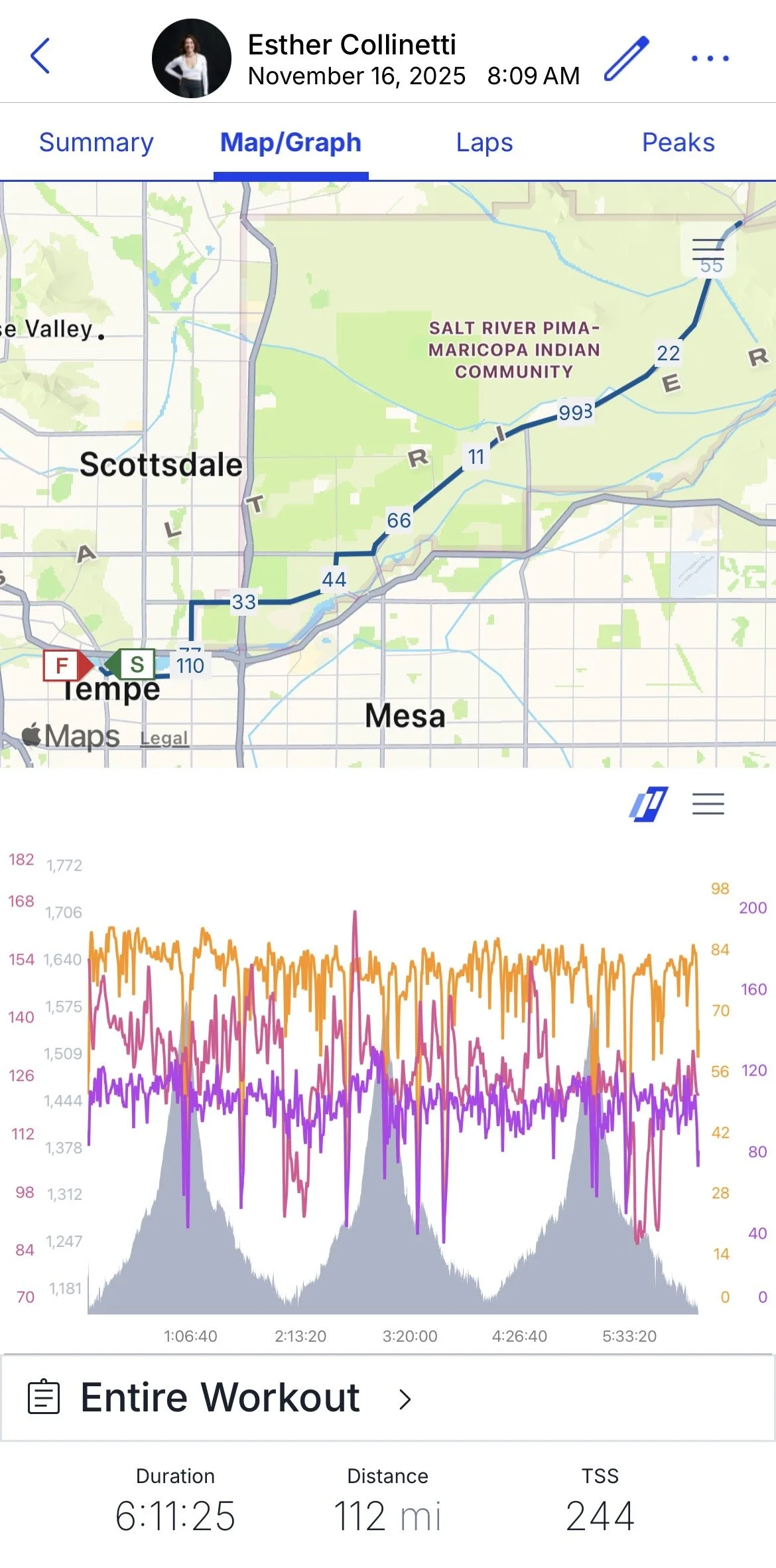
The bike course consisted of 3 loops with a total elevation gain of 2,579 feet. We had a tailwind heading towards the Salt River Pima-Maricopa Indian Reservation and a headwind on the return to Tempe. One of the best parts about riding 112 miles on a looped course was that I got to see Jimmie several times. Our Airbnb was just a mile from the big turnout of Scottsdale onto the reservation. Seeing him on the course always gave me an incredible boost of energy.
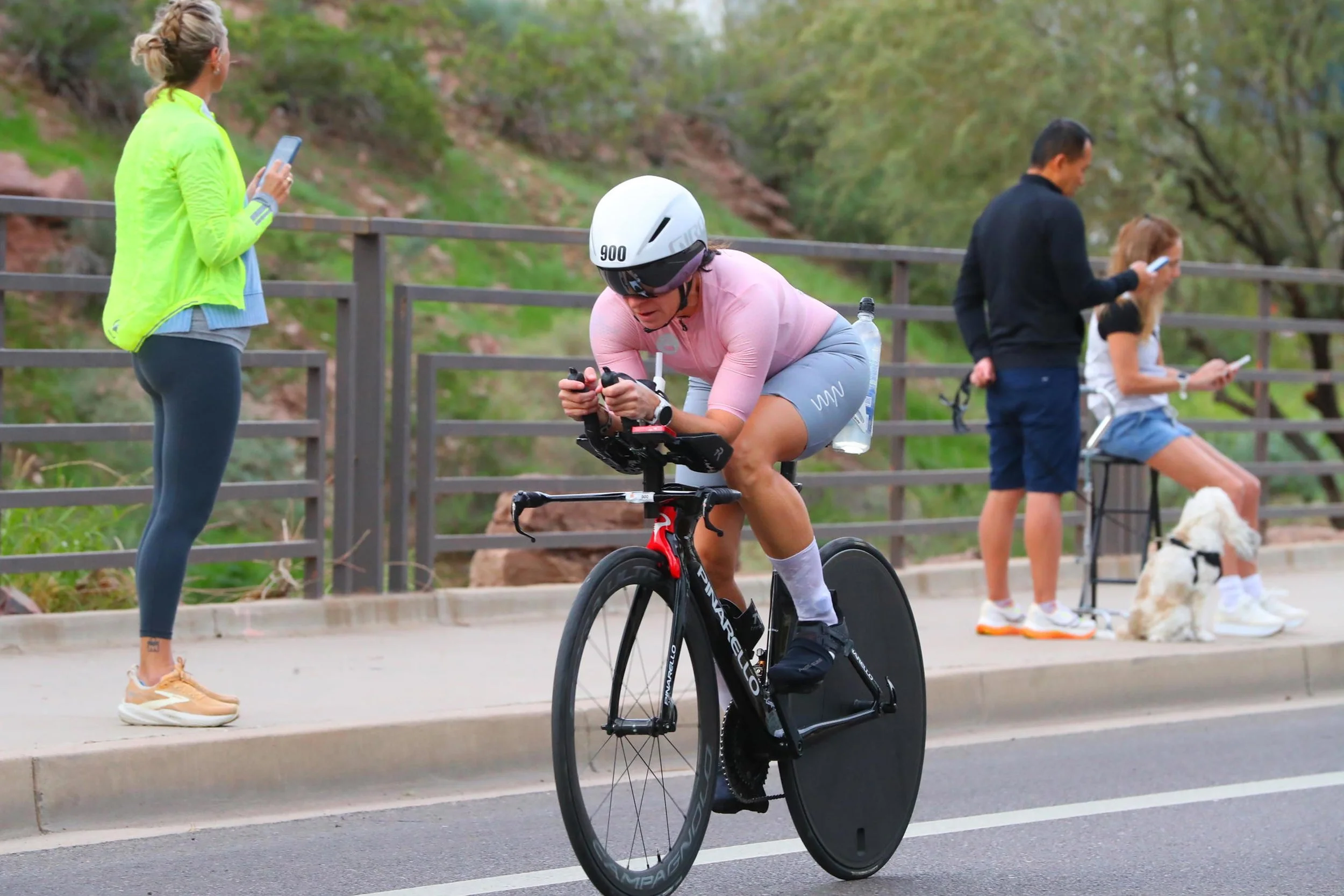
Given my recent health struggles, I rode conservatively. In the 3 weeks leading up to IRONMAN Arizona, my long rides left me feeling seasick, so I approached race day with extra caution. In hindsight, I wish I had pushed my pace more and made fewer stops - I stopped 5 in total: for bathroom breaks, grabbing my personal needs bag, and once for a mechanical chain drop. I think these stops may have cost me a 2nd place in my age group.
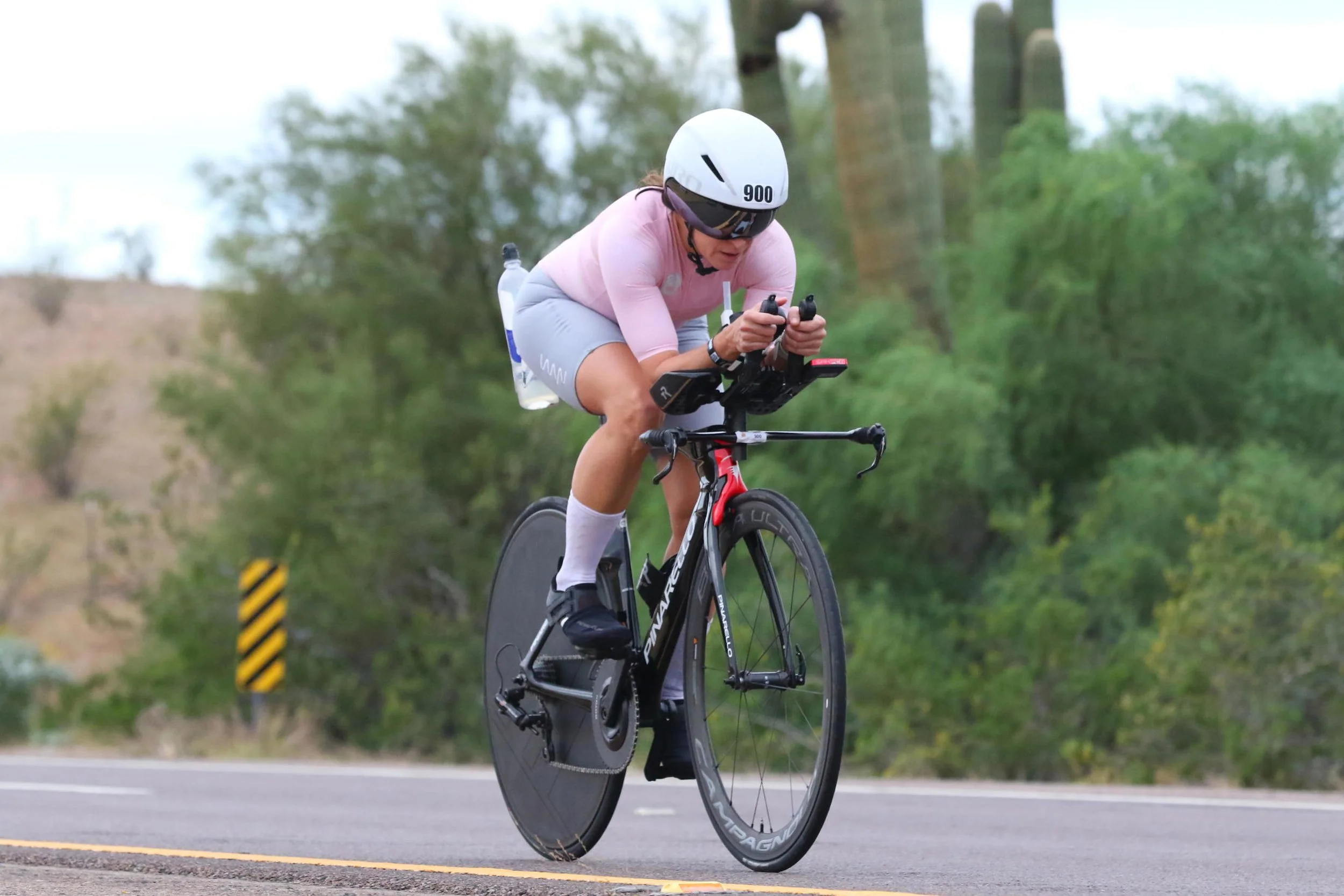
Still, I genuinely enjoyed the ride both emotionally and physically. Unlike in past races, I never felt disappointed, disheartened, or frustrated during the bike leg. I truly credit this to my migraine medication; in prior races, I would often get massive headaches on the bike, derailing me physically and emotionally.
During the bike, I stuck to my usual fueling plan: 80 grams of carbs, 1500 mg of sodium, and about 1 liter of fluids per hour. The temperature reached 70F (21C). I finished the bike in 6:11, coming 5th in my age group.
T2 TRANSITION FROM BIKE-TO-RUN (TIME: 5:07)
I came off the bike feeling good. After handing my bike to a volunteer, I ran into transition to make sure my vertigo or motion sickness wasn’t an issue - all vestibular systems checked out fine. This was a huge relief. I grabbed my run bag, made a quick stop at the porta-potty, and then headed into the changing tent.
With a smirk, I removed my new Silca aero socks – funny enough, I’d originally snubbed them when Jimmie gave them to me, but I ended up loving the comfort they added. After applying Vaseline to my feet, I put on my running socks and headed out to start the marathon.
RUN 26.2 MILES (TIME: 4:35:45)
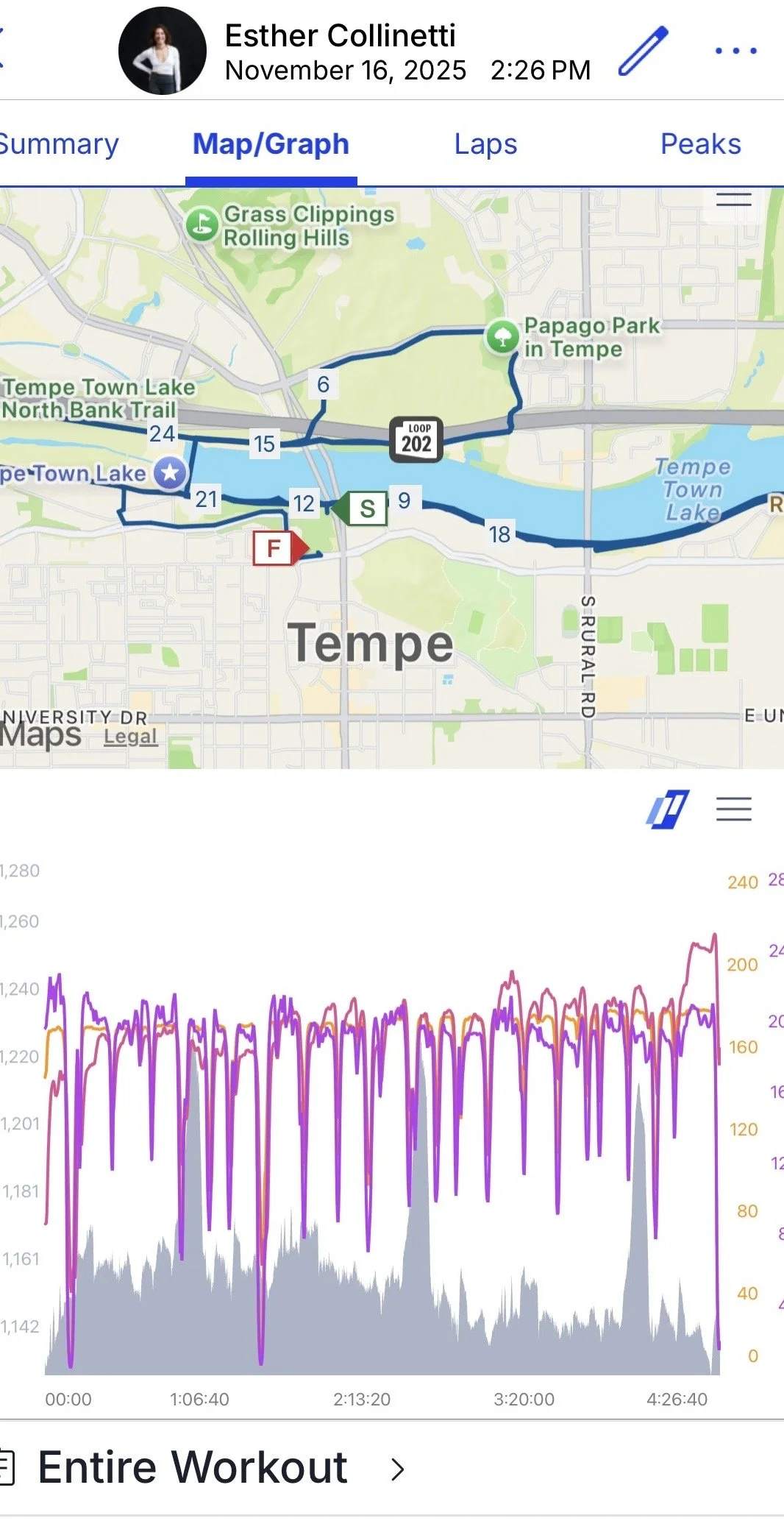
The marathon was a 3 loop course along Tempe Lake. I was miserable during the first loop and had to stop twice at the porta-potties, thinking I was about to shit myself. Thankfully, both stops turned out to be false alarms - the first at mile 1 and the second at mile 8 – just post-bike IRONMAN bloating. After that, I committed to racing without any more porta-pot stops.
Starting my second lap, I saw Jimmie, who told me I was between 4th and 5th place. I hadn’t known my position all day, so this news gave me a boost. I picked up the pace after the halfway marker. Heading into the final lap, Jimmie said I was holding 4th but advised me to dig deep since I was steadily closing the gap to the woman in 3rd who had started with a 20+ minute lead, now reduced to just 7 minutes.
On the last loop, I increased my speed but stayed ontop of my hydration and fueling. In the final two miles, I let loose – no longer held back by fear of my vestibular migraines. I felt like myself again: strong, fearless, and free. I managed to pass her by 8 seconds, securing 3rd place in my age group.
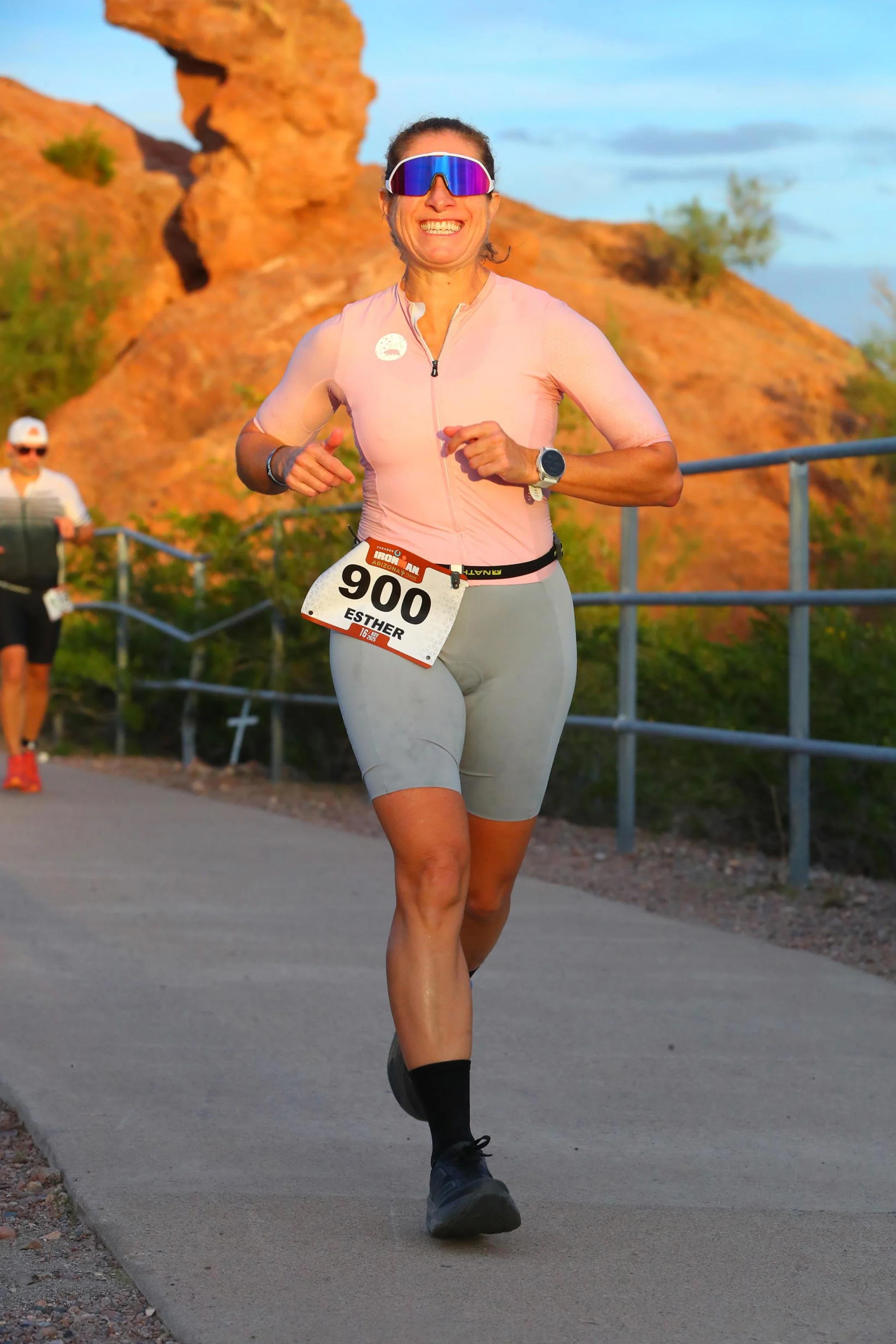
For fueling, I used every aid station: Maurten gel every 30 minutes, orange slices, water, and occasionally I grabbed a Mortal Hydration, along with Precision Fuel and Hydration sodium capsules and Base Electrolyte salt. Due to my new diagnosis, I raced completely caffeine-free, since I’ve had to cut out trigger foods, caffeine among them. I was tempted more than once to grab a caffeinated gel or some Coke, but I’d come too far to risk it. The best part about being caffeine-free was feeling steady and clear-minded the whole race, with no highs or lows – a beautiful experience.
I finished the marathon in 4:35, placing 2nd in my age group for the run.
POST RACE
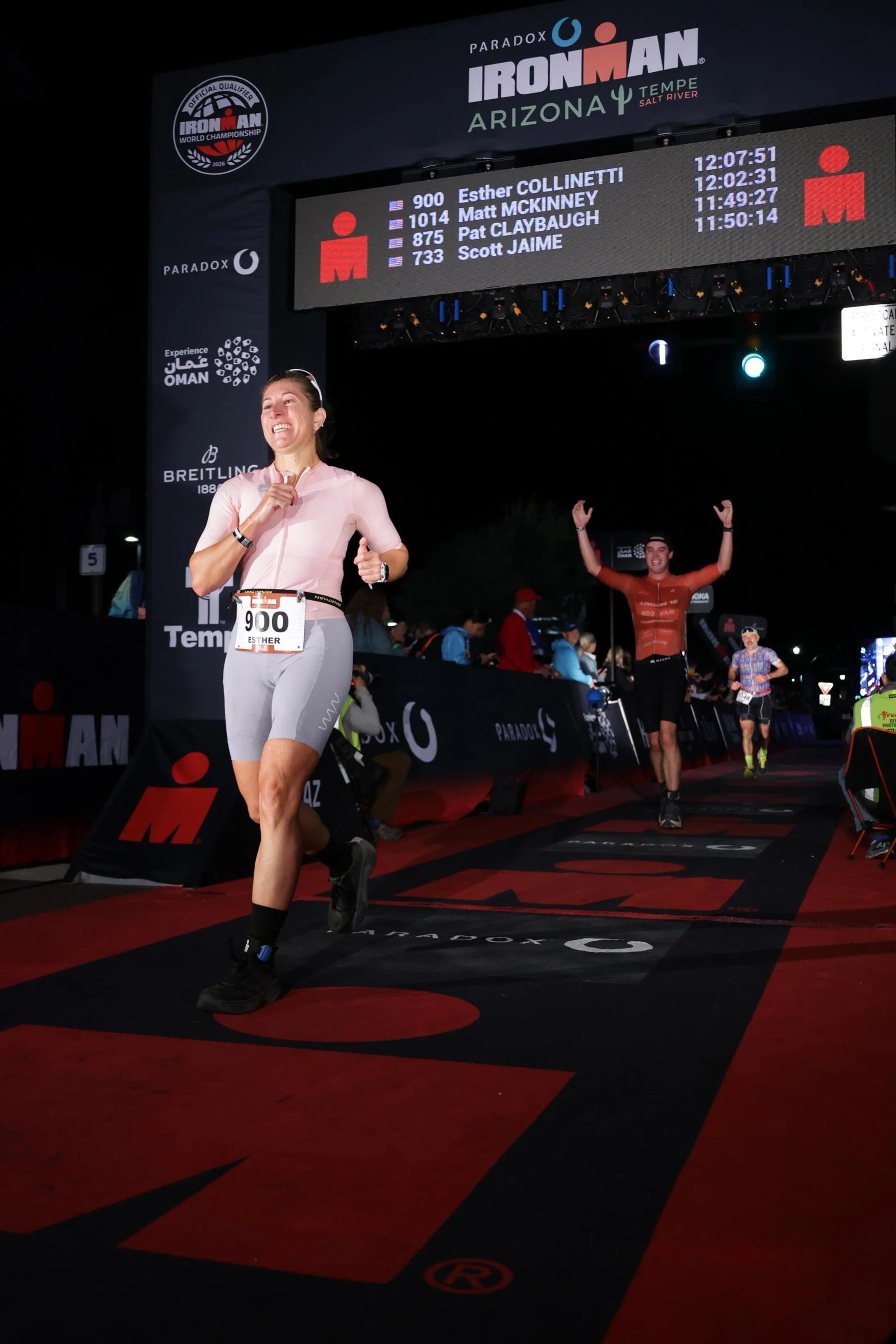
I finished with a time of 12:07, placing 3rd in my age group. Unfortunately, I didn’t earn a Kona slot. There were 40 slots total in this race: 11 allocated to the top female age groupers and 11 to the top males, leaving 18 slots - 4 went to the next fastest females in the new performance ranking, and 14 to the next fastest men in their respective performance ranking. Even without a Kona slot, I was extremely proud of my performance. This was truly a team effort from start to finish and a wonderful way to end the year on a high note. There will be many more races to fight for a Kona slot, but this one was about finding myself again.