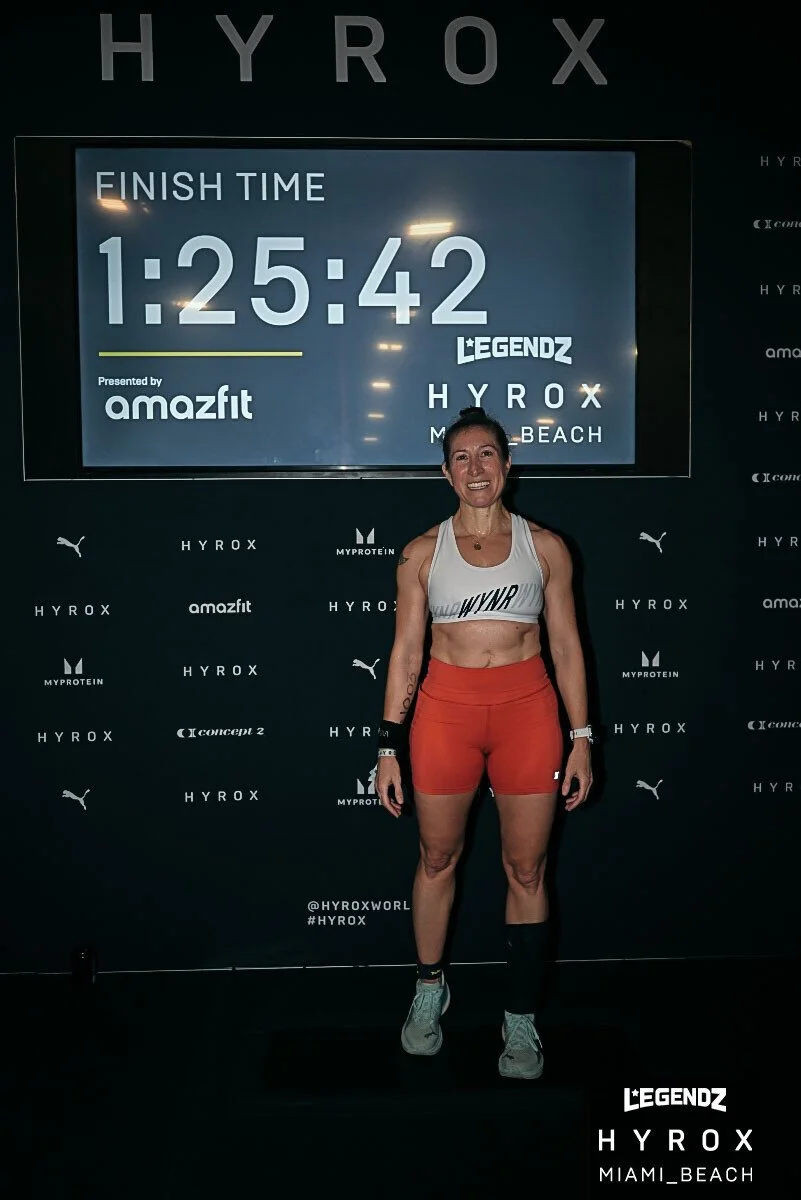
Lot of Lessons: My First HYROX
I will never forget stepping into the Miami Convention Center for my first HYROX race two weeks ago. I was honestly taken aback. It was chaotic, loud, intense, packed with young athletes who looked incredibly polished with curated outfits, styled hair, and even bull body glitter.
It felt completely different from my triathlon world, and for a moment, I wondered if I should even race.
But as I took it all in, that initial shock began to shift. Beneath the high-energy atmosphere and the bold personalities, there was something else, an openness that was hard to miss. Athletes of all backgrounds, body types, and experience levels were there, each bringing their own story and reasons for competing.
It didn’t feel exclusive. In fact, it felt surprisingly welcoming. There was space for everyone willing to show up and put in the hard work, and that realization grounded me.
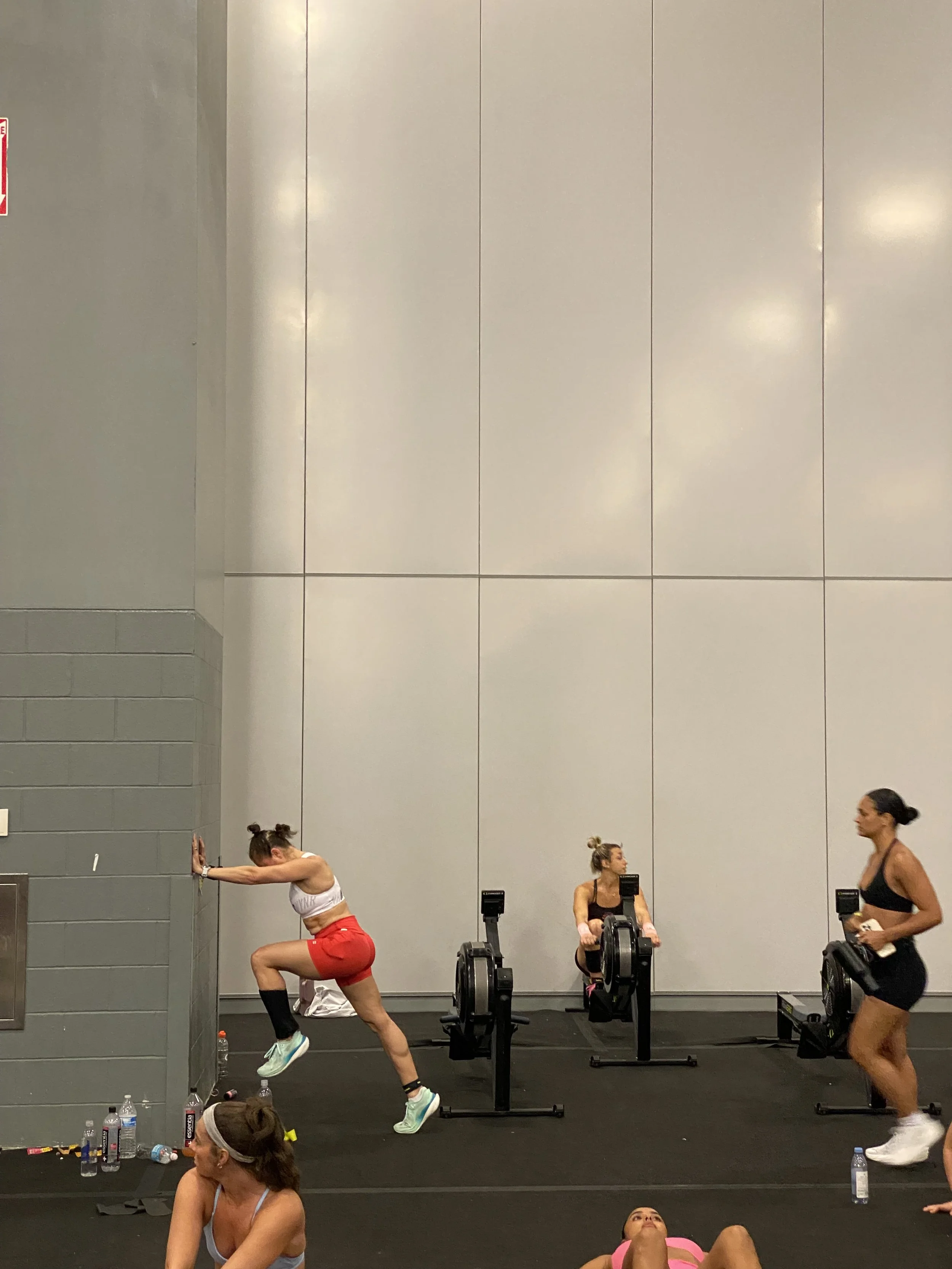
Stepping into the warm-up area before my race time, I was equal parts excited, curious, and a little unsure of what lay ahead. As a triathlete, I’m used to long, steady efforts with carefully planned pacing and fuel strategy. HYROX, however, promised something entirely different: a blend of strength, grit, fatigue under load, and relentless forward motion.
Only ten weeks earlier, I had committed to learning the HYROX movements, building strength, and preparing my body for a type of load it wasn’t accustomed to. Crossing the finish line in 6th place in the Female 50–54 Individual Open division was more than a placement. It was validation that stepping outside my comfort zone was worth it.
This race was never just about the result. I mean, yes, I’m super competitive, and I wanted to do well. But as a triathlete coach, I signed up because I wanted to experience firsthand what a HYROX training load feels like when layered on top of a triathlon training. I wanted to know how the added strength load impacts endurance performance, weekly scheduling, and overall fatigue.
These were questions I couldn’t fully answer for my athletes without going through the process myself. I wanted to understand not just the physical demands of race day, but also the preparation for it and recovery afterwards.
Over those ten weeks, I found myself navigating a completely new training dynamic. Balancing swim, bike, and run sessions with functional strength work required intention and flexibility. Some days felt empowering. Others highlighted weaknesses I hadn’t needed to confront before.
But that was exactly the point.
With HYROX growing rapidly in popularity, I knew more of my athletes would become curious about this hybrid sport. My goal was to be ready, to guide them not just with theory, but with lived experience.
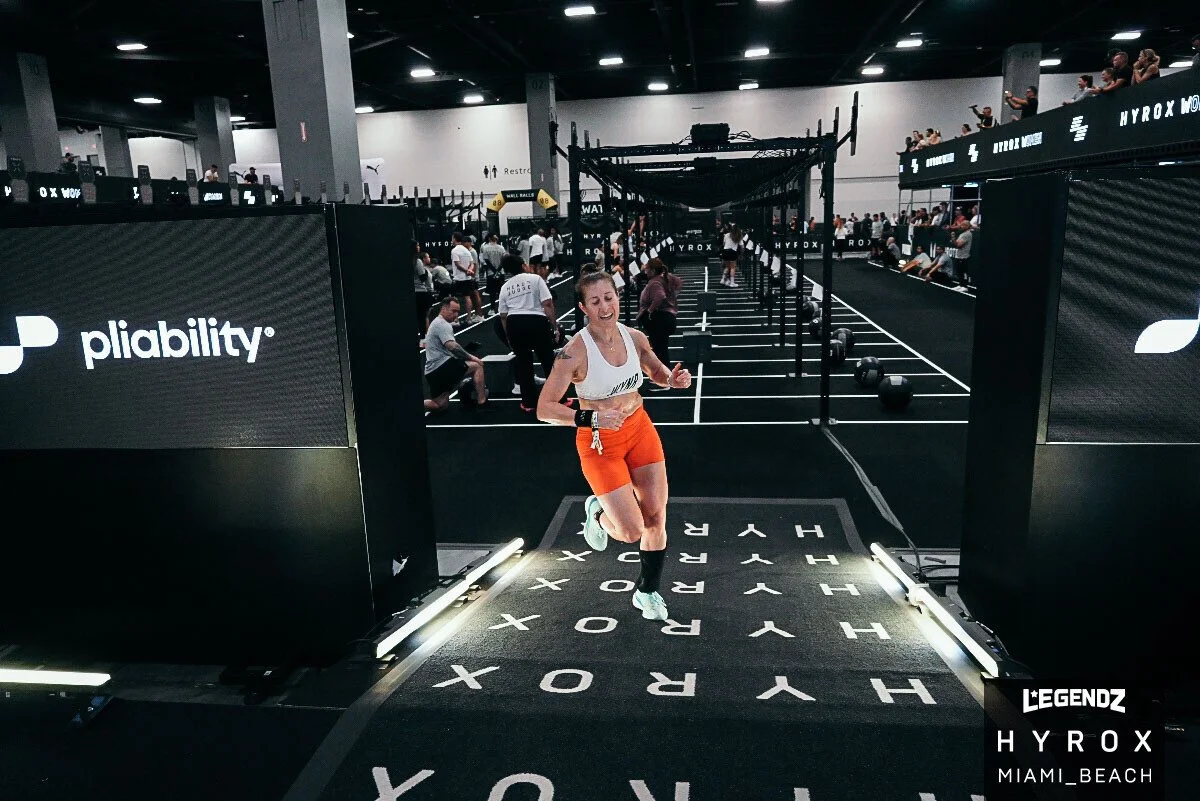
RACE RECAP
I woke up feeling so nervous on race morning. I also didn’t sleep much the night before, 4.5 hours, with night sweats. Thanks, perimenopause!
Since breakfast wasn’t happening, I defaulted to a bar, a banana, and an electrolyte pre loader of 1500mg of sodium. While walking to the race venue, I drank a Maurten Drink Mix high in carbs and hoped that would be enough.
I came into this race trusting my running and my IRONMAN endurance engine. But HYROX has a way of exposing everything you’re not ready for!
And for me, that “everything” had a name: wall balls.
From the moment I woke up, they were in my head. Not the start line. Not even the sleds. The wall balls. I had struggled with them in training, never able to string together more than 25 unbroken reps under fatigue. They require coordination, and under fatigue, my heart rate would shoot up through the roof. I feared failing them at the very end.
So I raced with that thought following me the entire race.
I had a strong start, or so I thought, compared to all the young millennials in my 12:10PM wave. I thought the waves were set by age group instead they are set by estimated finishing time.
The first run, which is 3 laps (5:47), felt controlled. I settled in quickly. The 1000-meter SkiErg (5:13) was smooth enough. I kept my eyes on my splits with a high stroke rate, exactly as I‘d been training for the past 10 weeks.
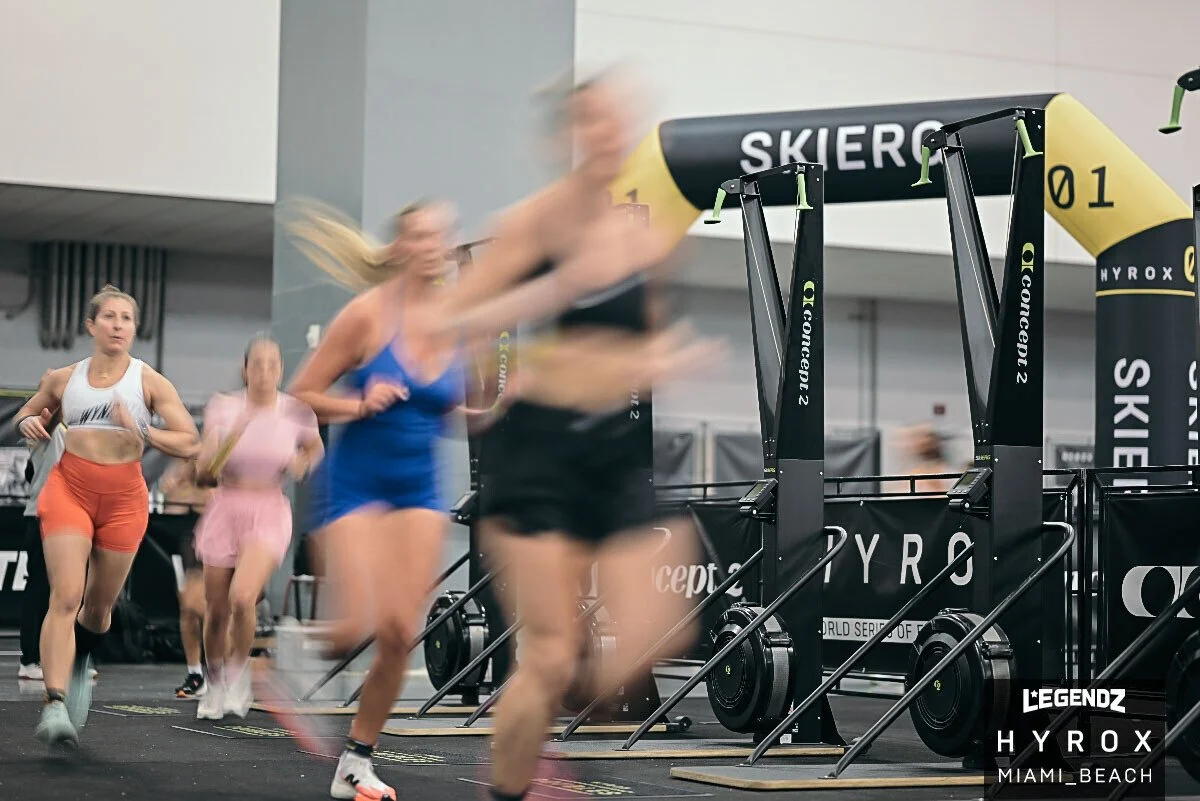
Run 2 (4:49) felt even better, and from here on out, it was only 2 laps. This is where I leaned into what I know, running and using the runs as a bit of a recovery between stations while making ground.
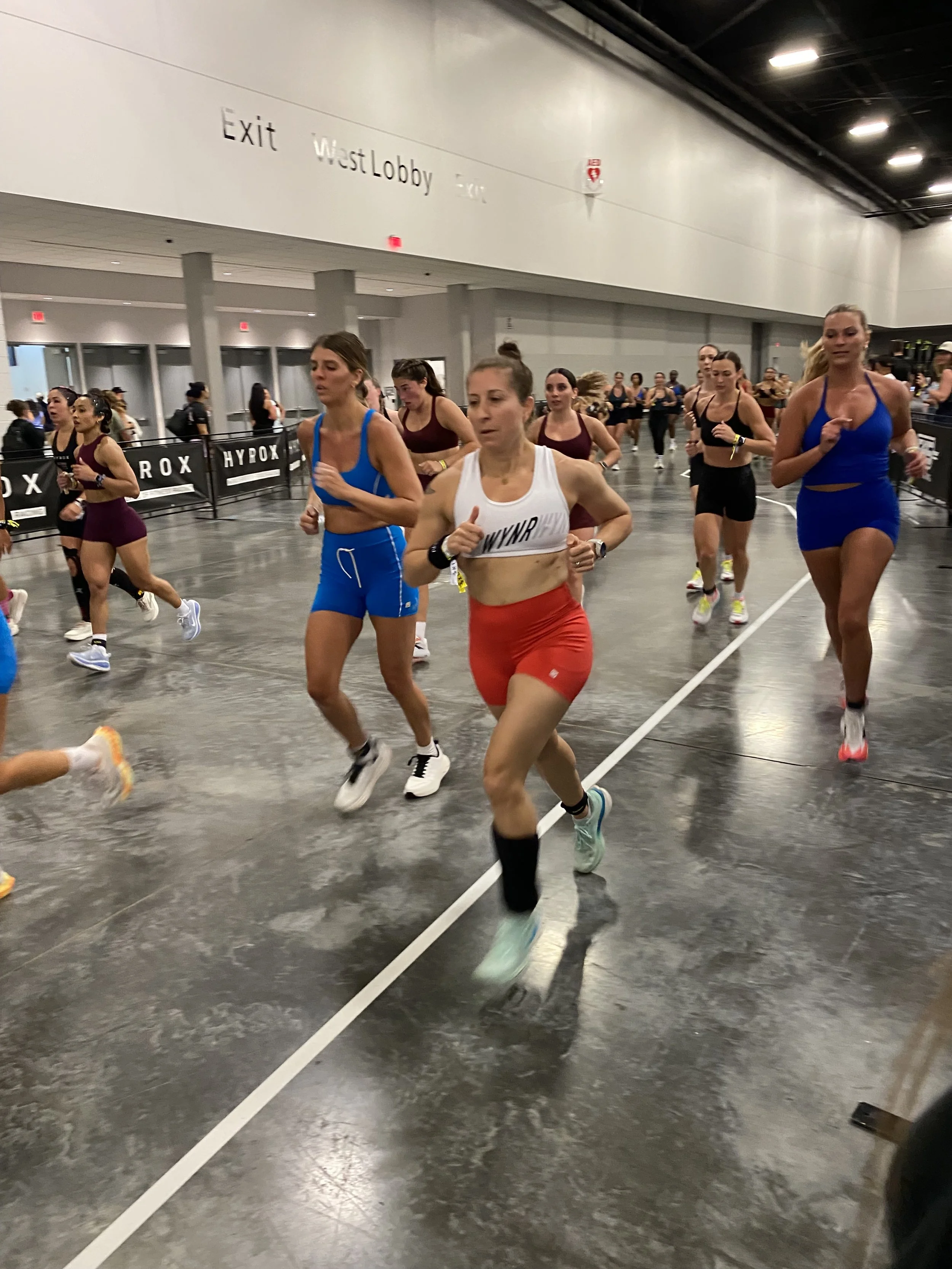
Then came the first real test: the sleds!
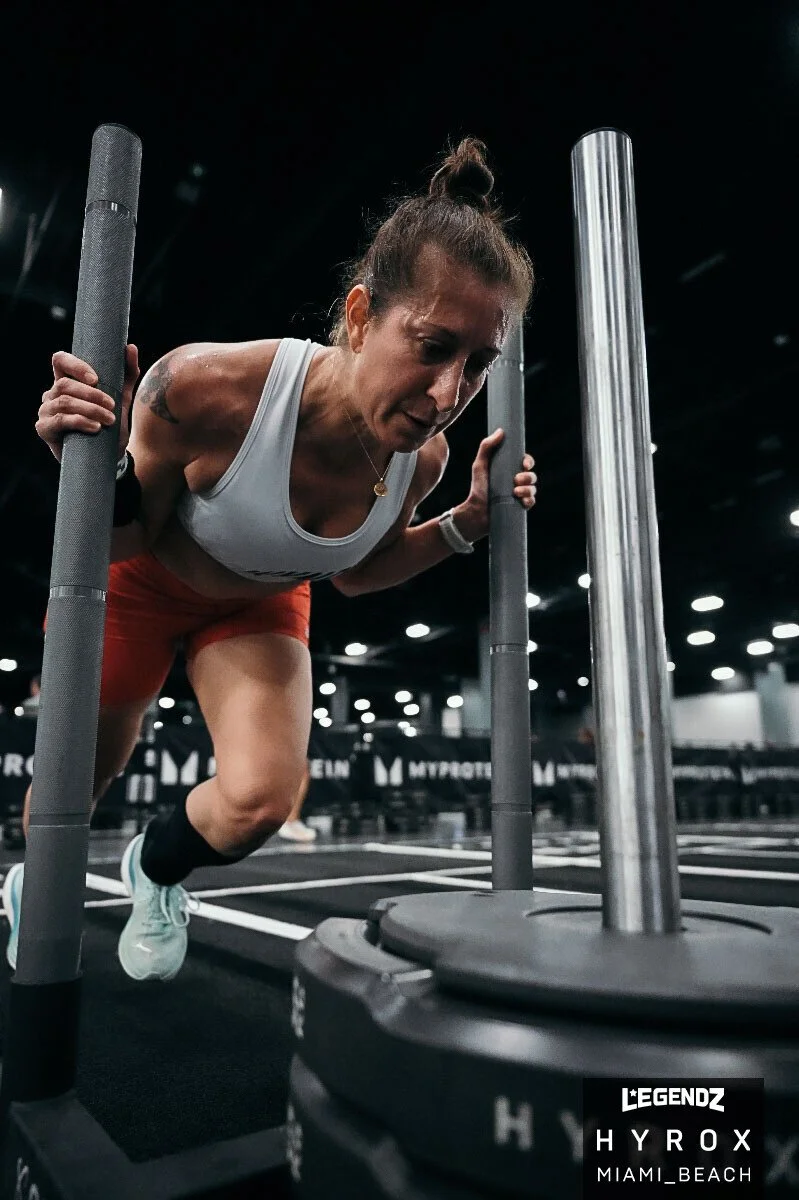
The 50-meter Sled Push (3:21) was supposed to be a strength station for me. In training, I felt strong pushing the sled. On race day, it felt like the sled had a mind of its own… and it wasn’t fucking moving. I kept thinking something had to be wrong with my sled!
On top of that, the sled felt bigger than what I’d trained on, so I couldn’t quite grip it properly, and I kept slipping out of my left sneaker! Next time, I need to tighten my shoelaces better and train with heavier weights on the sleds.
I came in expecting confidence. I left that station questioning everything.
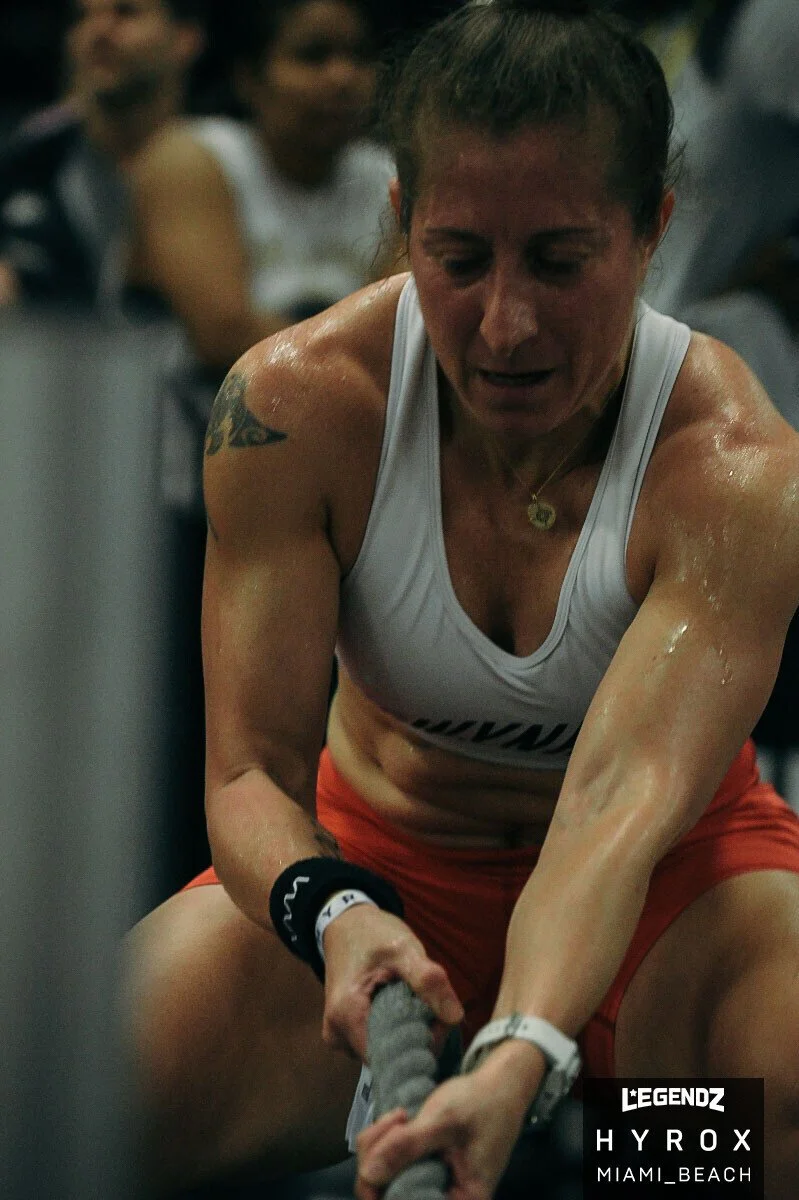
I used Run 3 (5:00) to flush my legs from the sled push, knowing that the 50-meter Sled Pull (6:01) was next, and I had not been confident with this station in training. The rope on race day felt almost bungee-like. I had never used a long rope in training either, and I couldn’t find a rhythm or settle into anything consistent. Instead of gaining time, I was just surviving it.
Thank god for Run 4 (5:04). It became my mental reset before going into the 80-meter Burpee Broad Jumps Station (4:35). Burpee broad jumps are one of my stronger HYROX stations because they reward pacing and aerobic endurance more than technical skill. They reward athletes who can just keep moving forward efficiently.
Run 5 (5:16), then the 1000-meter Row (5:27), and suddenly I could feel it: the accumulation! But I was happy to be more than halfway done at this point. My rowing technique has improved a lot since I first started but I still have a long way to go with my rowing. I am confident that with more practice, I can improve in this station. I am still very much in my head on how to move correctly on the rower.
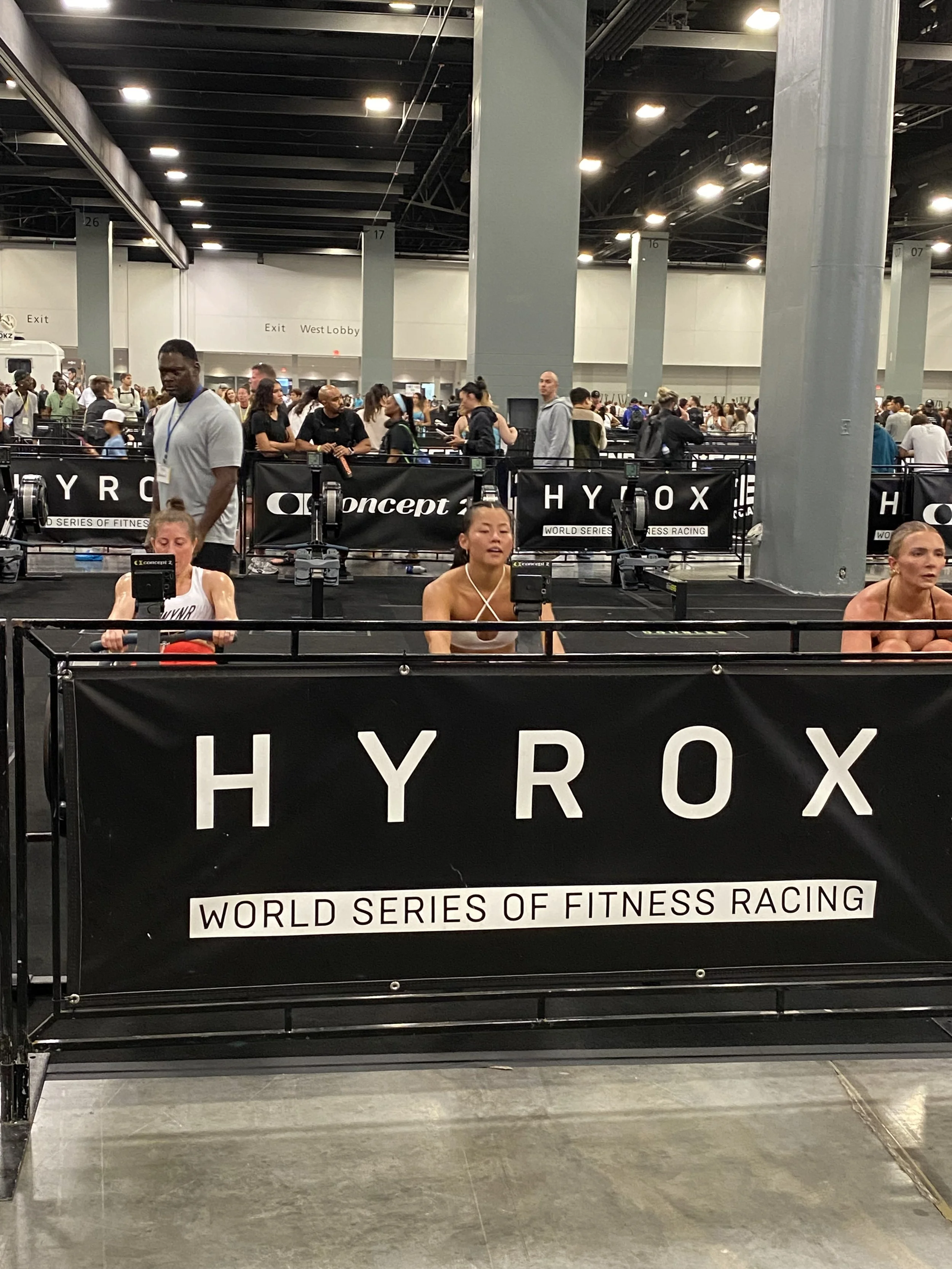
Farmers carry (1:52) was a rare moment that actually felt fast. Quick, controlled, in and out. Of all the HYROX stations, I ranked the highest here. I had no idea I had a strong hand grip, but I never had to place the kettlebells on the floor. I just grabbed them and ran the full 200-meters until placing them back where they came.
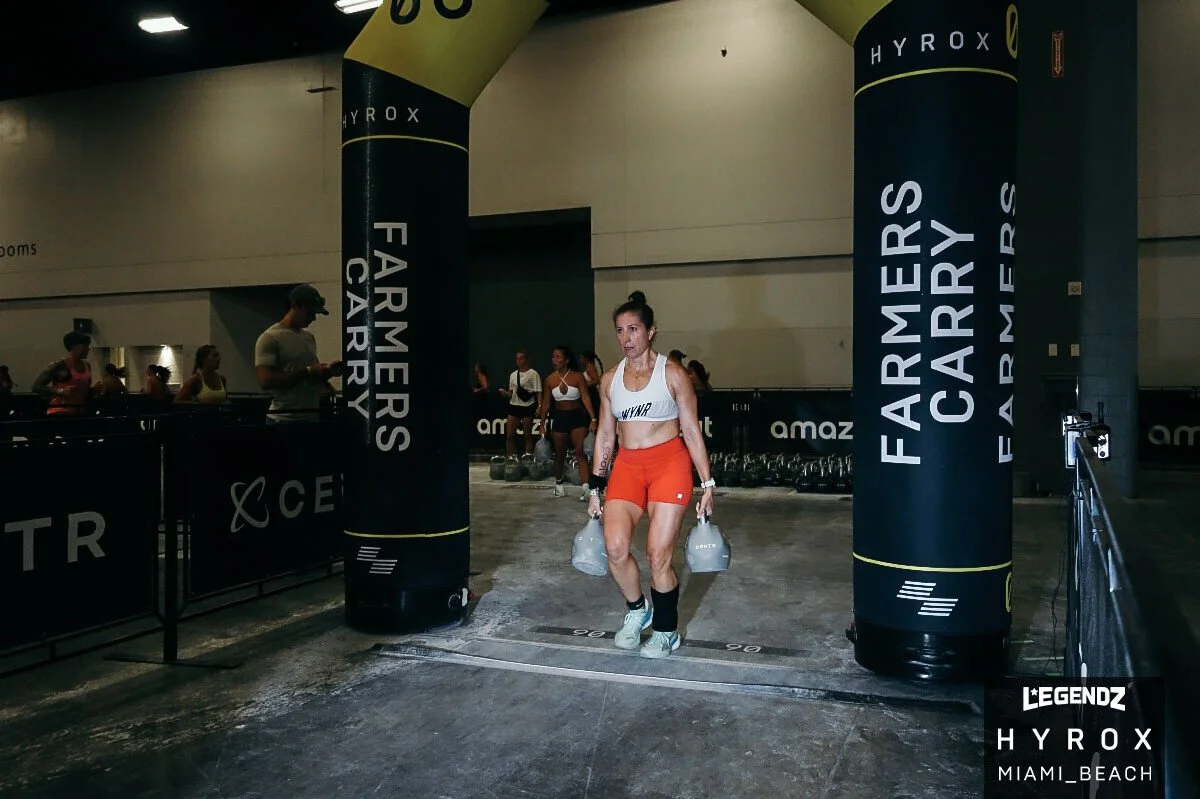
Run 7 (5:10) as I headed into the 100-meter Sandbag Lunges (5:06), the mistake that changed everything. Things unraveled a bit here.
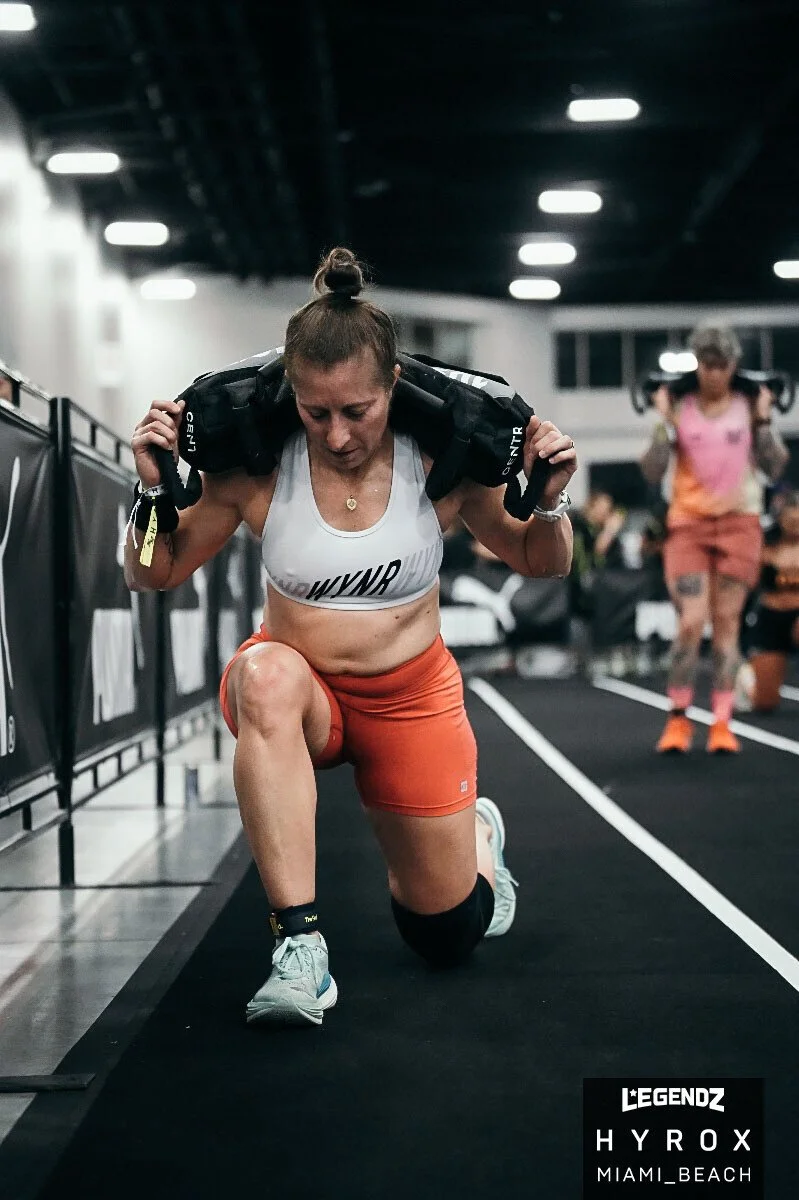
In training, I had already learned the hard way on this station. Mid-training I developed deep knee bruising from repeatedly hitting the kneecap on the floor too aggressively. So I adapted by not tapping my knee on the floor with every lunge, knowing that on race day I would have to. On race day, I wore a knee pad to protect my kneecap in this station. But I was also super cautious, and almost hesitant, slightly slowing before each knee touch to avoid that sharp impact.
I was hitting the depth every time but the judge didn’t agree. She didn’t like my hesitation on breaking the impact with each rep, and after 3 warnings, she gave me a 2-minute penalty. She stopped me at the halfway point, asked me to extend my arm so she could take a picture of my bib number on my forearm, and that was it. At this point, so far into the race, my rhythm was broken, and just like that, my race was no longer just physical; it was mental chaos.
But one thing IRONMAN teaches you is to problem-solve and move on. I held it together into Run 8 (5:05), refusing to let the penalty derail the rest of the race.
Then came the final station I’d been thinking about all day: Wall Balls (4:56).
Somehow, the thing I feared the most didn’t break me. I got through them. Not perfectly, not pretty, but I got through them, and I dare to say, I actually enjoyed them!

My total Roxzone Time was: 5:47.
My final time was 1:23 (plus 2-minute penalty). I finished 6th in my age group, even with the penalty. And honestly… that’s what makes it sting. Without that 2-minute setback, without that interruption, the result would have been different. That’s what I’m sitting with after this race.
HYROX showed me exactly where I’m strong… and exactly where I’m not.
What’s next? I didn’t come out of this race feeling satisfied. Don’t get me wrong, I am incredibly proud of what I did, but I am just hungry for more!
I’m aiming for the podium.